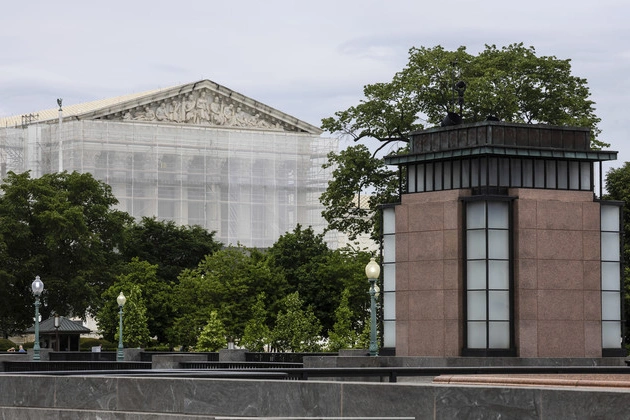
The Supreme Court recently made a significant decision regarding access to government efficiency records, particularly those of the Department of Government Efficiency (DOGE).
In a ruling that surprised many, the high court restricted a lower-court order that granted a watchdog group broad access to examine DOGE’s recommendations for cost savings within executive branch agencies. The majority opinion stated that the initial directive allowing such extensive access was not appropriately tailored to the ongoing dispute.
The Legal Implications
The crux of the matter lies in whether DOGE should be considered a federal agency subject to the Freedom of Information Act or if it functions as a presidential advisory body exempt from public record disclosures. The Supreme Court emphasized the importance of separation of powers and urged judicial restraint in delving into internal Executive Branch communications.
While the decision was supported by the majority, the liberal justices voiced their dissent without elaborating on their perspectives. This partial victory for the Trump administration comes amid a lawsuit filed by Citizens for Responsibility and Ethics in Washington (CREW) and their pursuit of DOGE’s organizational structure and authority.
The Trump Administration’s Stand
The Trump administration maintains that DOGE merely provides recommendations to agency officials, who ultimately make decisions on budget allocations and staff reductions. However, suspicions raised by U.S. District Judge Christopher Cooper suggest a more authoritative role for DOGE, implying that its recommendations are effectively mandates rather than suggestions.
While the Supreme Court’s order may seem like a setback for transparency advocates, the door remains open for CREW to continue their quest for information and testimonies related to DOGE’s operations.