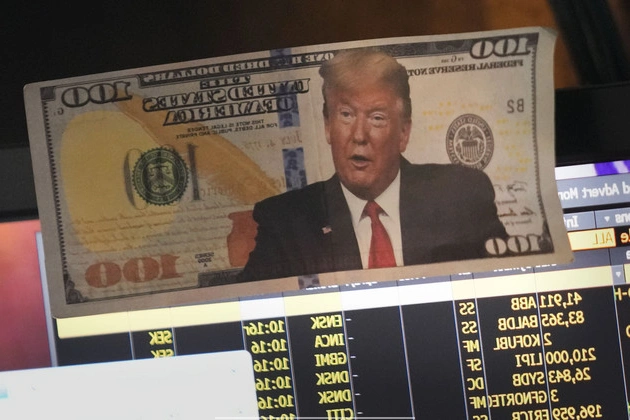
President Donald Trump’s trade policies have raised concerns about the future of the dollar’s dominance in global markets and its impact on financial stability.
The dollar plays a crucial role in global markets, serving as a key currency for trade and investments. Any decline in its appeal could have far-reaching consequences, affecting borrowing costs, import prices, and investment portfolios.
Challenges to Dollar Dominance
Trump’s tariffs and trade threats have cast doubts on the sustainability of the dollar’s position as the world’s primary currency. While industry leaders appreciate his tax cuts and deregulation efforts, the focus on tariffs has created uncertainty about the dollar’s future.
The value of the dollar has fluctuated under Trump’s administration, with a notable decrease since his inauguration. This volatility has also affected the demand for U.S. Treasuries, impacting global investors’ confidence in American assets.
Implications for Financial Markets
The financial community is closely monitoring Trump’s trade policies and their effects on the dollar’s strength. Wall Street experts warn that prolonged uncertainty could weaken the U.S.’s financial markets and global reputation.
While the stock market has shown resilience amid trade tensions, the long-term implications of a weakened dollar remain a concern. Trump’s administration aims to boost domestic manufacturing by devaluing the dollar, but critics worry about the broader economic impact.
The Role of the Dollar in Global Economics
The dollar’s dominance has provided the U.S. with economic advantages, including lower borrowing costs and increased purchasing power. This status has been instrumental in navigating past economic crises and financing recovery efforts.
However, the current administration’s policies have amplified existing threats to the dollar’s stability. Foreign investors are diversifying their portfolios away from U.S. assets, citing concerns about unsustainable deficits and political uncertainties.
Future Outlook and Risks
Economists warn that continued trade tensions and policy shifts could erode the dollar’s global influence, affecting the U.S.’s borrowing capacity and economic resilience. Moody’s Ratings has highlighted the risks posed by fiscal deficits and escalating debt levels, emphasizing the importance of maintaining the U.S.’s financial strengths.
While the U.S. remains a dominant player in global finance, the current trajectory raises questions about the sustainability of its economic policies and the dollar’s long-term viability.
As the debate over the dollar’s future unfolds, it’s essential to assess the potential impact of trade policies on financial stability and global economic dynamics.