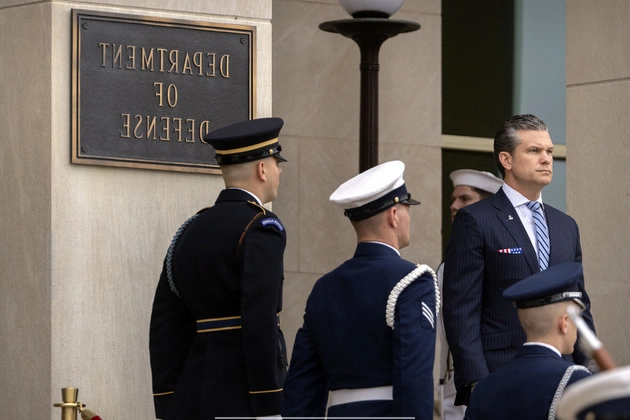
Defense Secretary Pete Hegseth has initiated a significant restructuring of military leadership, aiming to streamline the top ranks by reducing the number of high-ranking officers. In a memo and video released on Monday, Hegseth outlined his plan to cut approximately 30 percent of the over 800 generals and admirals, with an additional 20 percent reduction in the National Guard.
The Restructuring Strategy
Emphasizing that this is not a hasty decision but a strategic move for enhanced efficiency, Hegseth highlighted the belief that an excessive number of generals and admirals does not necessarily translate to greater success in military operations.
One of the key proposals includes consolidating the European and Africa commands, each currently overseen by four-star generals, and merging the Northern and Southern commands for better coordination.
This initiative is being hailed as the most comprehensive review of military leadership since the Goldwater Nichols Defense Reorganization Act of 1986, which empowered U.S. commanders worldwide to plan and execute military missions effectively.
Phased Approach to Implementation
While specific details of the restructuring are yet to be disclosed, Hegseth outlined a two-phase plan for the changes. The first phase will focus on reducing general officer positions by 20 percent, with the potential for swift implementation. The subsequent phase will involve a deeper evaluation of the Unified Command Plan, guiding the global deployment of U.S. forces, and further reducing the general officer ranks by an additional 10 percent.
Referred to as a “strategic review,” this process is expected to bring about significant transformations in the global combatant commands structure.
Ensuring Military Preparedness
Amidst these changes, the Army has also devised plans to eliminate around 40 positions held by generals, marking a substantial reduction in the current number of approximately 200 such roles. Hegseth underscored that these measures are essential to maintain the U.S. military’s reputation as the most formidable force globally, prioritizing strength and preparedness for any future challenges.
While the timeline for the restructuring remains unspecified, Hegseth’s commitment to upholding operational excellence and readiness underscores the gravity of these reforms.